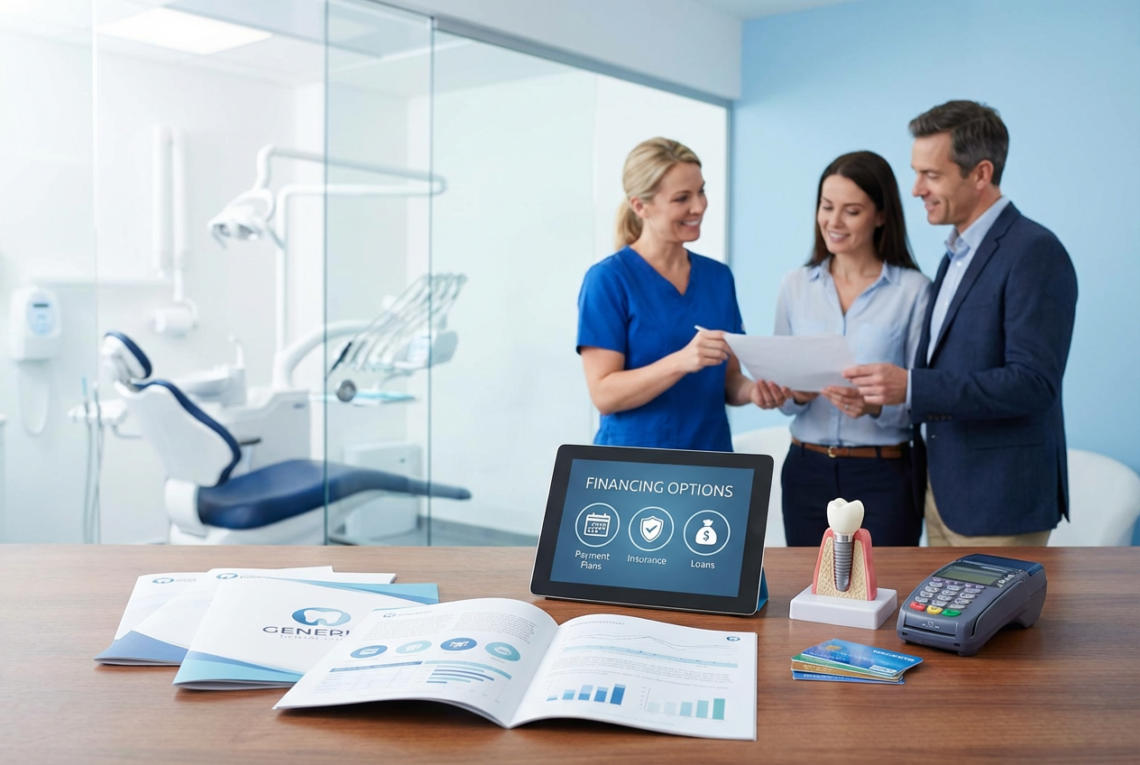
Dental implants cost between $3,000 and $50,000+ depending on complexity. You need clear financing strategies to protect your budget. Which option suits your case?
What Do Medical Financing Companies Provide?
Healthcare lenders specialize in dental procedures.
- CareCredit offers 0% interest for 6–18 months.
- Proceed Finance approves loans up to $75,000 with terms of 96 months.
- LendingClub provides fixed‑rate installment loans.
- Alphaeon Credit supports cosmetic dentistry with high limits.
Over 60% of implant patients in the US use third‑party financing according to industry reports. That shows strong adoption.
Can Dental Clinics Offer Direct Payment Plans?
Yes. Clinics reduce barriers through in‑house programs.
- In‑house plans allow monthly installments, sometimes interest‑free.
- Dental schools cut costs by 30–50% because supervised students perform the work.
- Membership plans cost $100–$200 annually and give 10–60% discounts.
University dental clinics in Pakistan also provide reduced fees, making them attractive for budget‑conscious patients.
How Do Personal Loans Support Implant Costs?
Banks and credit unions provide fixed monthly payments.
- Personal loans cover implants and preparatory work.
- 0% APR credit cards give 12–21 months interest‑free.
- HELOCs offer lower rates for full‑arch cases.
Average personal loan interest in Pakistan ranges from 18–25%, which impacts repayment planning.
Can You Use Tax‑Advantaged Accounts?
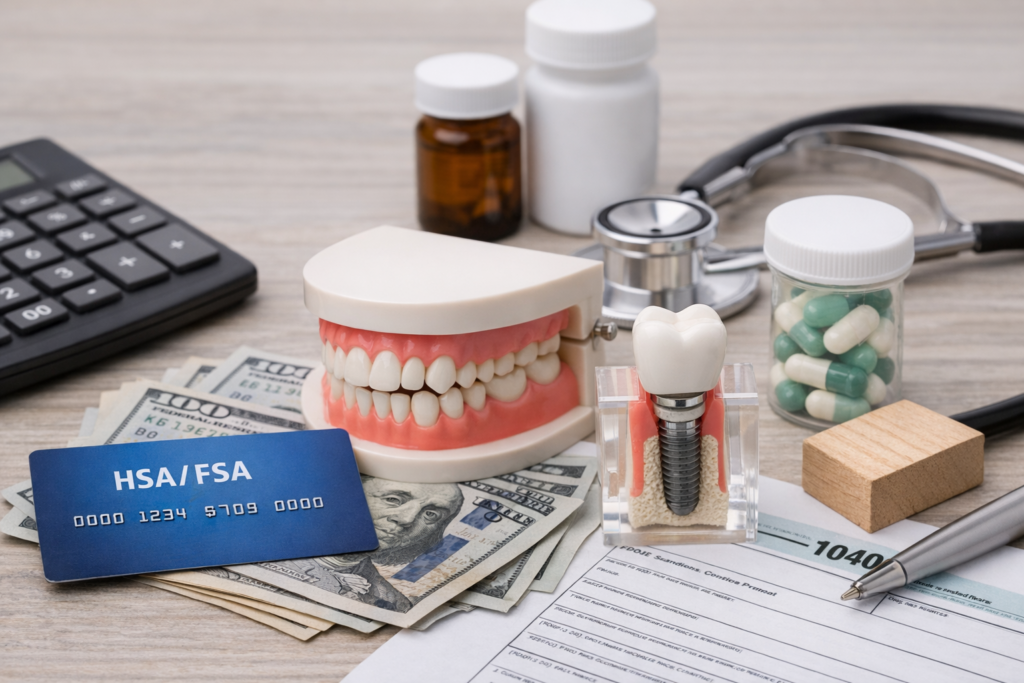
Yes. HSAs and FSAs let you pay with pre‑tax dollars.
- HSAs roll over year to year.
- FSAs expire annually.
- Both reduce taxable income by your marginal tax rate.
Patients save 20–30% instantly through tax benefits in countries where HSAs and FSAs apply.
How Does Buy Now, Pay Later Work?
BNPL platforms expand access.
- Cherry approves patients in 60 seconds.
- Funding up to $50,000.
- Flexible repayment up to 60 months.
- True 0% APR for qualified borrowers.
BNPL adoption in healthcare grew 200% between 2020–2025, making implants more accessible worldwide.
Do Employers Help With Dental Costs?
Yes. MERPs and HRAs reimburse employees for dental expenses.
- Submit receipts and get reimbursed.
- Covers costs insurance excludes.
Employer reimbursement programs increase affordability for salaried patients.
Can Savings Plans Reduce Implant Costs?
Dental savings plans guarantee approval.
- Annual fee unlocks discounted rates.
- No waiting periods.
- Perfect for uninsured patients.
Over 40% of uninsured patients in the US use savings plans for dental work.
What Alternative Options Exist?
Crowdfunding, nonprofit support, and family loans can bridge gaps.
- Crowdfunding platforms raise funds quickly.
- Nonprofits sometimes sponsor implant cases.
- Friends and family loans provide flexibility.
Would you combine multiple strategies to reduce risk?
FAQs
What is the best way to finance dental implants?
The best option depends on your credit score and treatment cost. Patients with strong credit often use personal loans or 0% APR credit cards. Patients needing larger sums prefer medical lenders such as Proceed Finance.
Can dental implants be paid in installments?
Yes. Many clinics provide in‑house payment plans. Installment loans from banks or healthcare lenders also allow monthly payments.
How much do dental implants cost on average?
Single implants cost $3,000–$5,000. Full mouth implants range from $25,000–$50,000+ depending on complexity.
Do dental schools provide cheaper implants?
Yes. University dental clinics reduce costs by 30–50% because supervised students perform the procedures.
Can patients with bad credit get dental implant financing?
Yes. BNPL platforms, dental savings plans, and nonprofit programs often accept patients with poor credit history.
Are HSAs and FSAs useful for dental implants?
Yes. HSAs and FSAs let you pay with pre‑tax dollars, saving 20–30% on treatment costs.
Do employers reimburse dental implant costs?
Some employers offer MERPs or HRAs. These programs reimburse employees after receipts are submitted for qualifying dental work.
Is crowdfunding a realistic option for dental implants?
Yes. Patients use platforms like GoFundMe to raise funds. Nonprofits also sponsor implant cases for eligible patients.
Can dental insurance cover implants?
Some modern insurance plans partially cover implants. Coverage varies, so you should confirm details with your provider.
What financing option suits full mouth reconstruction?
Large cases often require extended loans. Proceed Finance offers up to $75,000 with terms of 96 months, making it suitable for full arch procedures.
Final Insights
- High‑cost cases → Proceed Finance, HELOC, Installment Loans.
- Quick treatment, bad credit → BNPL, Dental Schools, Savings Plans.
- Tax savings → HSA/FSA.
- Employer support → MERPs/HRAs.
- Uninsured patients → Membership Plans or Crowdfunding.
“USA Parameter – Precision Data, Smarter Decisions.”