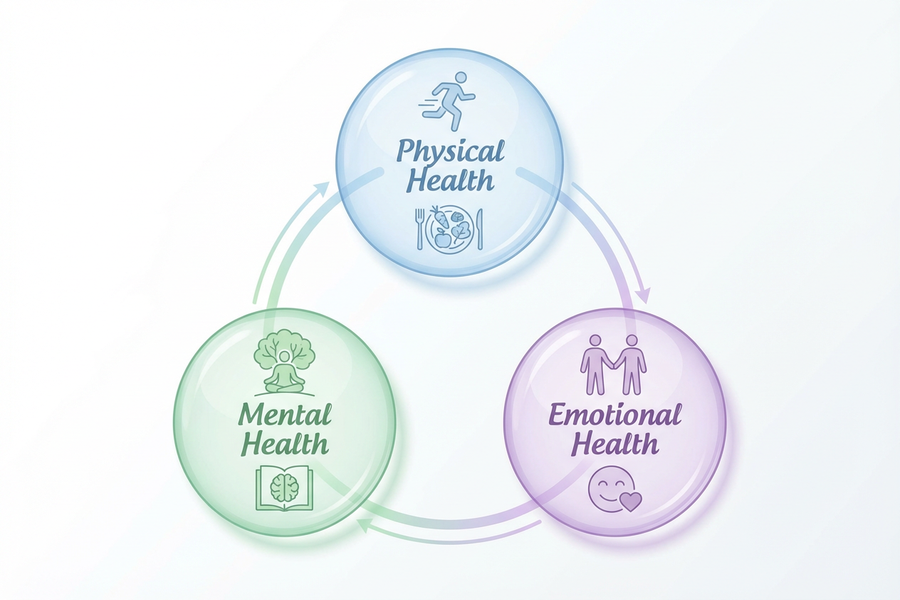
Health is balanced. You need strength in body, stability in mind, and connection in relationships. The Health Triangle explains this balance. It was first introduced in Alaska in 1997 and later supported by the World Health Organization, which defines health as complete physical, mental, and social well-being.
Each side of the triangle carries equal weight. When one side weakens, the whole structure collapses. A strong triangle means longer life, greater resilience, and higher happiness.
Which side of your triangle feels strongest today?
What Is the Health Triangle?
The health triangle is a framework that measures physical, mental/emotional, and social health. It was first introduced in Alaska in 1997 and later aligned with the World Health Organization’s definition of health: “a state of complete physical, mental, and social well-being.” Each side of the triangle is equally important. If one side weakens, the entire structure collapses.
Do you want to know which side of your triangle needs more attention today?
Why Does Physical Health Matter?
Physical health is the body’s ability to function at its best. It includes exercise, nutrition, hydration, sleep, and lifestyle choices.
- Exercise: The American Heart Association recommends 150 minutes of aerobic activity weekly plus strength training twice a week.
- Nutrition: WHO confirms that good nutrition strengthens immunity and lowers risks of diabetes and cardiovascular disease.
- Hydration: The body is 60% water. Poor hydration causes fatigue, headaches, and even depression.
- Sleep: Adults need 7–9 hours of sleep. The Sleep Foundation links poor sleep to anxiety and weakened immunity.
Latest data shows dehydration and poor sleep directly increase risks of depression and anxiety. Can you see how your daily routine impacts both body and mind?
How Does Mental Health Influence Your Life?
Mental health shapes how you think, feel, and cope with challenges.
- Stress management: Chronic stress triggers fatigue and digestive issues.
- Positive mindset: Affirmations and mindfulness improve resilience.
- Self-care: Treat mental illness with the same seriousness as physical illness.
- Emotional awareness: Recognizing emotions prevents burnout.
Exercise boosts serotonin and endorphins, which regulate mood and appetite. Small, achievable goals build confidence and reduce anxiety. What mental habits are you practicing to protect your triangle?
Why Is Social Health Essential?

Social health reflects the quality of your relationships and community ties.
- Communication skills: Clear communication builds trust.
- Support systems: Strong relationships reduce stress and increase happiness.
- Community engagement: Social groups foster belonging and purpose.
- Boundaries: Healthy boundaries protect emotional well-being.
Research shows loneliness nearly doubles the risk of early mortality. Strong social connections are now recognized as a public health priority worldwide. Who in your circle gives you the strongest support?
How Do the Three Sides Connect?
The triangle works as an interconnected system:
- Physical → Mental: Exercise improves mood.
- Mental → Social: Stress causes withdrawal.
- Social → Physical: Loneliness increases heart disease risk.
Neglecting one side destabilizes the others. Poor sleep worsens anxiety, which leads to social isolation. Can you identify where imbalance shows up in your life?
What Habits Strengthen Your Health Triangle?
| Dimension | Daily Habits | Advanced Strategies |
| Physical | 30 min exercise, 8 glasses water, 7–9 hrs sleep | Track hydration, use fitness tech, meal prep |
| Mental | Journaling, affirmations, mindfulness | Cognitive-behavioral tools, therapy, digital detox |
| Social | Call a friend, join a group, set boundaries | Volunteer work, networking, family rituals |
Which of these habits can you start today to strengthen your weakest side?
How Can You Assess Your Balance?
- Health Triangle Worksheet: Identify strong and weak areas.
- Wellness Apps: Track sleep, hydration, and mood.
- Community Programs: Join fitness or support groups.
Self-assessment helps you see where imbalance exists. Have you ever mapped your triangle before?
The Bottom Line
Health is holistic. You cannot be physically strong without mental stability, and you cannot be mentally resilient without social support. The health triangle proves that balance is the key to longevity, happiness, and resilience.
Are you ready to build a stronger triangle today?
FAQs
What does the health triangle represent?
The health triangle represents physical, mental/emotional, and social health. Each side carries equal importance. Balance across all three ensures long-term well-being.
Who created the health triangle?
The health triangle was first introduced in Alaska in 1997 as a school project. It later aligned with the World Health Organization’s definition of health, which emphasizes complete well-being.
Why is balance in the health triangle important?
Balance prevents collapse of the structure. Weakness in one side affects the others. For example, poor sleep harms mental health, which can lead to social withdrawal. Research shows that sleep deprivation increases risks of anxiety and depression by up to 40%.
How can you improve physical health?
You can improve physical health through exercise, nutrition, hydration, sleep, and lifestyle choices. The American Heart Association recommends 150 minutes of aerobic activity weekly plus strength training twice a week. Proper hydration also reduces fatigue and improves mental clarity.
How does mental health affect the triangle?
Mental health influences both physical and social health. Stress can cause fatigue and isolation. Positive habits like affirmations, mindfulness, and therapy strengthen resilience. Studies confirm that exercise increases serotonin levels, which regulate mood and appetite.
Why does social health matter?
Social health builds connection and support. Strong relationships reduce stress and lower risks of heart disease. Research shows loneliness nearly doubles the risk of early mortality, making social connection a public health priority.
How can you assess your health triangle?
You can use a Health Triangle Worksheet, wellness apps, or community programs. Self-assessment helps identify weak areas and track progress. Digital tools now allow you to monitor hydration, sleep, and stress levels in real time.
What is the bottom line of the health triangle?
The bottom line is clear: health is holistic. You cannot be strong in one area without balance in the others. A stable triangle means longer life, greater happiness, and stronger resilience.
Discover advanced health, lifestyle, and wellness resources at USA Parameter.
