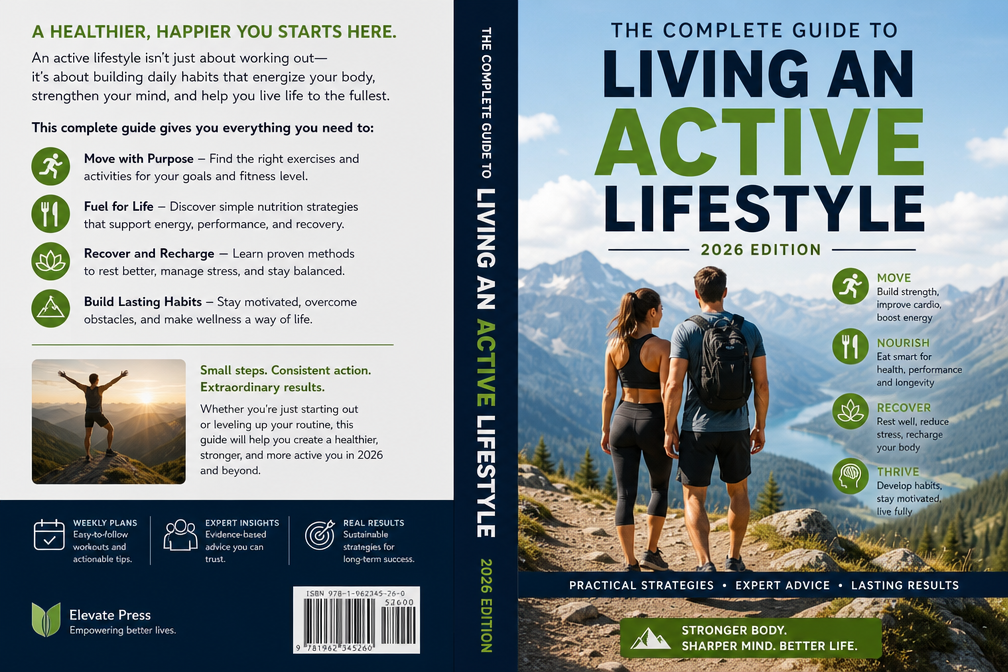
You don’t need a gym membership to live an active life. You need movement woven into your normal day, on your worst days as much as your best ones. Below you get a full breakdown of the science, the framework, and the daily tactics that separate people who stay active for years from people who quit after three weeks.
What Is an Active Lifestyle?
An active lifestyle means you move through your day instead of staying seated for hours at a time. Movement covers planned workouts and small daily actions, such as a walk to the store or a flight of stairs at the office. You count as active once sitting becomes the exception in your day, not the rule.
Global numbers back up why that shift matters. Nearly one third of adults worldwide, close to 1.8 billion people, did not meet the recommended levels of physical activity in 2022. Researchers found that inactivity increased by about 5 percentage points between 2010 and 2022, and projections put that figure at 35% by 2030 if the trend continues.
Why Does an Active Lifestyle Matter?
Movement changes your body and mind across three timelines: today, this month, and years down the road. You feel calmer, sharper, and more energized within minutes of a walk or a workout. Sleep quality improves the same night. Stress drops and focus holds steady for hours afterward.
Strength, stamina, and confidence build over weeks of consistent effort. Blood sugar stabilizes. Your body regulates weight more effectively, and inflammation levels fall.
Long-term data make the strongest case. Physical inactivity accounts for close to 16% of deaths in the U.S. each year, according to recent exercise-statistics research. Regular movement lowers your risk of heart disease, stroke, type 2 diabetes, several cancers, and cognitive decline. Bones and joints stay stronger too, which cuts your risk of falls and fractures later in life.
How Much Physical Activity Do You Need Each Week?
WHO guidelines set a clear target for most adults: at least 150 minutes of moderate-intensity physical activity per week, or roughly half that amount at a vigorous intensity. Federal guidelines in the U.S. recommend 150 to 300 minutes of moderate-intensity activity, or 75 to 150 minutes of vigorous-intensity activity, or an equivalent combination of both.
A simple talk test tells you your intensity zone without any equipment:
| Intensity | Talk Test | Examples |
| Low | You can talk and sing | Casual walking, light stretching |
| Moderate | You can talk but not sing | Brisk walking, doubles tennis |
| Vigorous | You struggle to hold a conversation | Running, boxing, heavy lifting |
Despite clear guidelines, most people fall short. Only 47.2% of U.S. adults met federal aerobic activity guidelines in 2024, and men outpaced women at that mark by a wide margin. Just 22.5% of adults met guidelines for both muscle-strengthening and aerobic activity in 2022, and that number rose sharply with education level. Start small if you begin from zero. Any activity above your current baseline improves your health, so build volume gradually instead of chasing the full target on day one.
What Makes an Active Habit Actually Stick?
Most people quit exercise routines for reasons that have nothing to do with willpower. Four pillars address the real causes.
Pick activities you enjoy. No single workout works for everyone. Swap running for swimming, dance, hiking, or a team sport if that keeps you coming back. Enjoyment turns a habit into something you look forward to instead of something you negotiate with yourself over.
Plan for your worst days. Anyone stays active on a calm, easy week. A habit survives long term when it accounts for exhaustion, travel, and busy stretches too. Two rules help here. A two-minute floor keeps your streak alive on rough days: commit to just two minutes of movement, no more. A “never miss twice” rule protects you from a single skipped session turning into a dropped habit; one missed day is normal, two in a row is the real warning sign.
Anchor movement to a routine you already have. Attach a walk to your morning coffee, or stretch during your nightly wind-down. A fixed trigger removes the daily decision of when to move, and that removes a major point of failure.
Track consistency alongside outcomes. A goal like a target weight or a 5K time depends on many factors outside your control, including sleep and genetics. Pair that goal with a process target you fully control, such as four movement sessions a week. Process goals keep you motivated through plateaus that would otherwise stall an outcome-only plan.
How Can You Stay Active at Work, During Commutes, and at Home?
At work, stand or pace during phone calls. Suggest a walking meeting for one-on-ones. Take the stairs by default and treat the elevator as the rare exception.
During commutes and errands, park at the far end of the lot, or exit transit one stop early. Walk or cycle for any errand under a mile instead of driving.
At home, treat chores like vacuuming, gardening, and washing the car as real movement instead of a rushed task. Add a short set of squats or push-ups while dinner cooks.
During leisure time, swap a sit-down coffee catch-up for a walking one. Plan active outings, such as a hike or a recreational sports league, instead of a default sedentary hangout. A workout partner raises your odds of follow-through, since accountability changes behavior far more than motivation alone.
What Does a Realistic Weekly Active Living Plan Look Like?
| Day | Structured Activity | Built-In Movement |
| Mon | 20-min brisk walk | Stairs at work |
| Tue | Rest or light stretching | Walking phone calls |
| Wed | 30-min strength session | Park farther away |
| Thu | Rest or light stretching | Walking meeting |
| Fri | 20-min jog or cycle | Stand during calls |
| Sat | Hike, sport, or dance class | — |
| Sun | Gentle mobility work | Household chores |
What Mistakes Stop People From Staying Active?
An all-or-nothing mindset costs people the most progress. A short 10-minute session still counts, yet many skip it entirely because it doesn’t match their idea of a “real” workout. Daily hard effort without rest leads to injury or burnout, and either one ends a routine fast. A borrowed routine that ignores your schedule or preferences rarely survives past a few weeks. An outcome-only goal collapses the moment progress stalls, and progress always stalls at some point. A missing backup plan for bad weather or a busy week turns one skipped session into a dropped habit.
Which Tools Help You Track Progress?
A step counter or wearable gives you a passive daily measure. A simple habit tracker, paper or app, marks whether you moved each day. Monthly photos or measurements catch changes that day-to-day comparisons miss. A training log records gradual gains in reps, weight, distance, or pace. Calendar blocks turn activity sessions into fixed appointments instead of optional tasks.
Frequently Asked Questions
What is an active lifestyle?
A way of living where regular movement, both structured exercise and everyday activity, stays a consistent part of your daily routine.
Why does an active lifestyle matter?
Regular movement lowers your risk of chronic disease, sharpens your mental health, and supports independence and mobility as you age.
How do you start an active lifestyle from a sedentary baseline?
Start with a small target, such as a 10-minute daily walk. Anchor that walk to an existing routine, then raise the volume gradually.
What counts as an example of active living in a normal day?
A walk during part of your commute, stairs instead of an elevator, a short workout, and light stretching in the evening instead of extended sitting.
What’s the Takeaway?
An active lifestyle grows from small, repeatable choices, not a 30-day challenge. Pick movements you enjoy. Build your routine around your worst days, not your best ones. Anchor activity to habits you already run on autopilot. Track your consistency alongside your results. Do that consistently, and staying active stops feeling like a chore you force and becomes simply how you live.
Your Trusted Source for Usaparameter Insights & Data