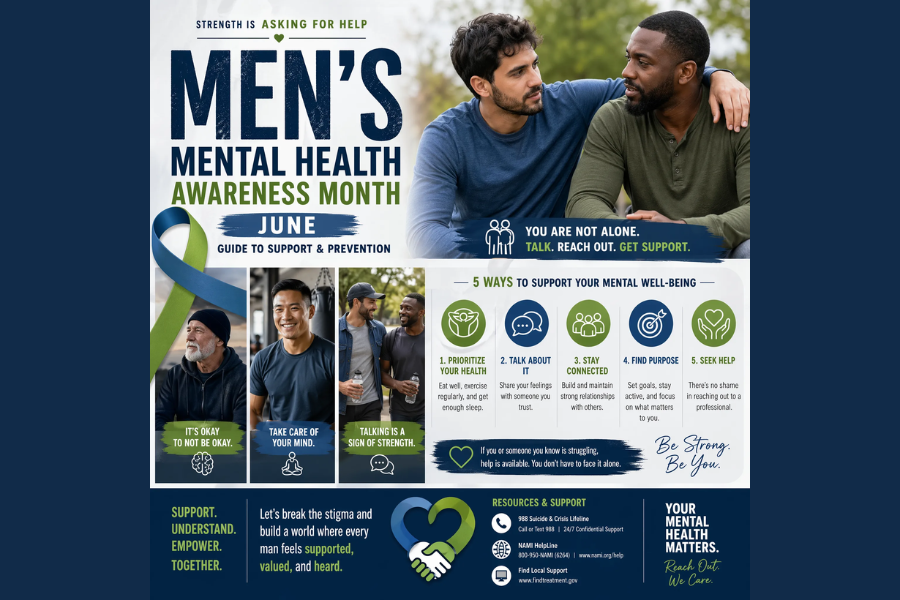
Men’s Mental Health Awareness Month in June gives you a chance to focus on the emotional and psychological well‑being of men everywhere. You see campaigns that challenge stigma, highlight suicide prevention, and promote therapy as a sign of strength. Statistics show men account for nearly 80% of suicides worldwide, yet many avoid professional help because of cultural pressure to appear tough. You can change that by starting conversations, sharing resources, and reminding men that vulnerability builds stronger families and communities.
When Is Men’s Mental Health Awareness Month?
Men’s Mental Health Awareness Month is observed in June in the United States and many countries. It runs alongside Men’s Health Month, focusing on both physical and psychological well‑being.
In the United Kingdom, November is recognized as Men’s Mental Health Month, tied to Movember, where men grow mustaches to raise awareness for suicide prevention and cancers such as prostate and testicular.
Why Should You Care About Men’s Mental Health?
Men account for nearly 80% of suicides worldwide. In the U.S., men are four times more likely to die by suicide than women.
Studies show 1 in 5 men experience mental health conditions, yet they are far less likely to seek therapy. Depression in men often appears as anger, irritability, or risk‑taking, not sadness.
Cultural pressure to “tough it out” creates stigma, leaving men isolated and vulnerable.
What Color Ribbon Represents Men’s Mental Health?
The green ribbon is the symbol of mental health awareness. You can wear it year‑round, but it is especially visible during June and November campaigns.
How Can You Support Men’s Mental Health?
- Start conversations: Ask “How are you, really?” to break the silence.
- Normalize therapy: Present professional help as proactive care.
- Promote healthy outlets: Encourage exercise, hobbies, and social engagement.
- Share resources: Use platforms like Turnwell Mental Health, HeadsUpGuys, MenLiving, and Campaign Against Living Miserably.
- Community action: Organize workshops, fundraisers, or awareness events in workplaces and schools.
What Role Does Intersectionality Play?
- LGBTQ+ men face higher rates of depression and anxiety.
- BIPOC men often have less access to care and rely on community support.
- Men with disabilities are almost five times more likely to report frequent distress.
Key Takeaway
Men’s Mental Health Awareness Month in June (and November in the UK) challenges stigma, encourages early intervention, and prevents suicide. Supporting men’s mental health year‑round builds stronger families, healthier communities, and saves lives.
FAQs
Which month is Men’s Mental Health Awareness Month?
Men’s Mental Health Awareness Month is observed in June in the United States and many countries. In the United Kingdom, November is recognized, often tied to Movember campaigns.
Why is June chosen for Men’s Mental Health Awareness Month?
June aligns with Men’s Health Month, allowing focus on both physical and psychological well‑being. The goal is to challenge stigma and promote early intervention.
Is November also Men’s Mental Health Month?
Yes. November is linked to Movember, a global campaign where men grow mustaches to spark conversations about mental health, suicide prevention, and cancers such as prostate and testicular.
What color ribbon represents Men’s Mental Health Awareness?
The green ribbon is the symbol of mental health awareness. You can wear it during June or November, or throughout the year to show support.
Why is Men’s Mental Health Awareness Month important?
Men account for nearly 80% of suicides worldwide. Studies show 1 in 5 men experience mental health conditions, yet they are far less likely to seek therapy. Raising awareness saves lives.
How can you support men’s mental health?
You can start conversations, normalize therapy, promote healthy outlets like exercise and hobbies, share resources, and support organizations such as HeadsUpGuys, MenLiving, and Campaign Against Living Miserably.
What are unique signs of depression in men?
Depression in men may appear as anger, irritability, or risk‑taking rather than sadness. Recognizing these signs helps encourage early support.
Are men from different communities affected differently?
Yes. LGBTQ+ men face higher rates of depression and anxiety. BIPOC men often have less access to care. Men with disabilities are almost five times more likely to report frequent distress.
USA Parameter is a multi‑niche digital hub that delivers diverse insights across celebrities, lifestyle, real estate, health, finance, tech, and news, positioning itself as a one‑stop platform for trending topics and in‑depth analysis.